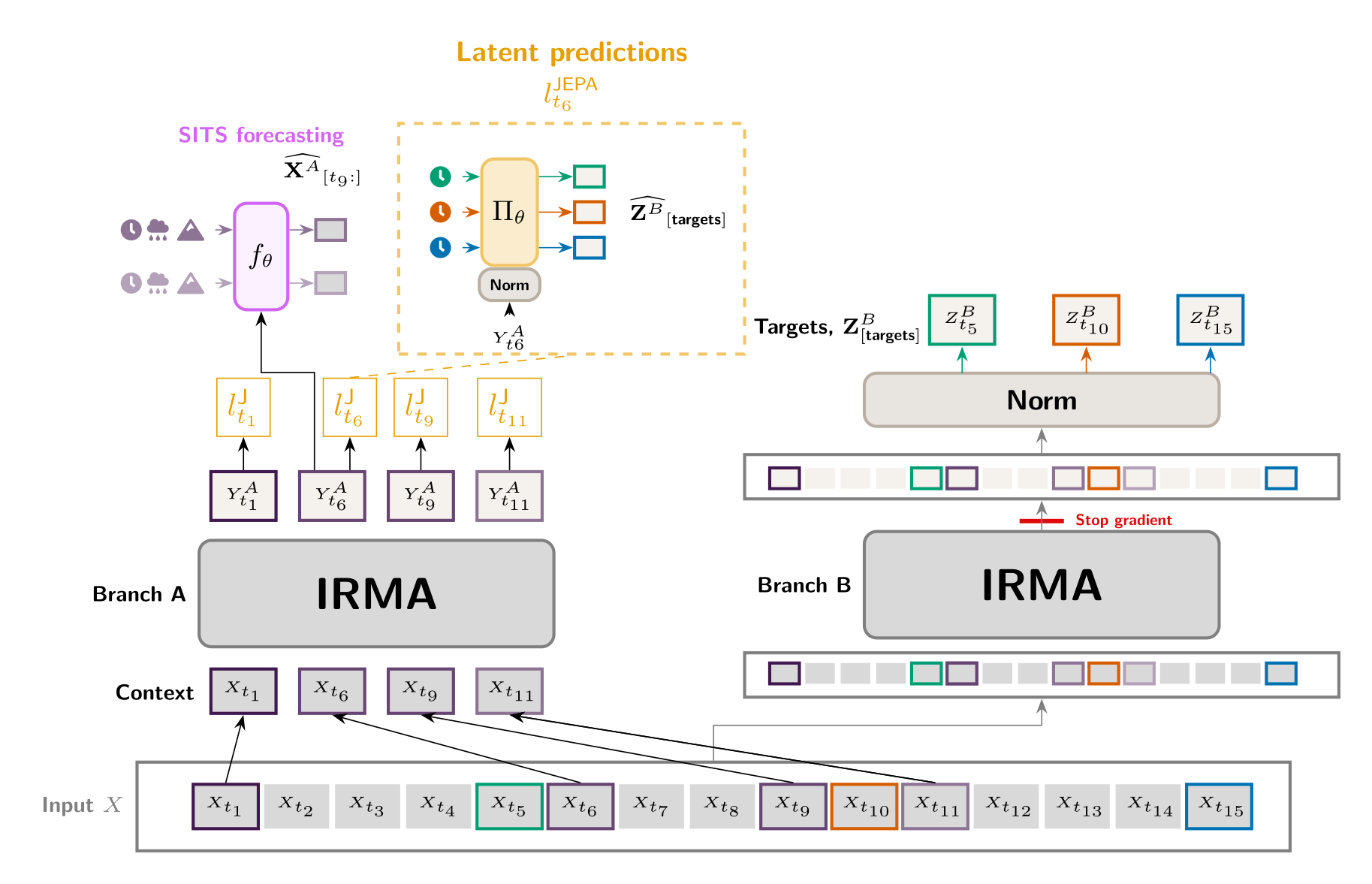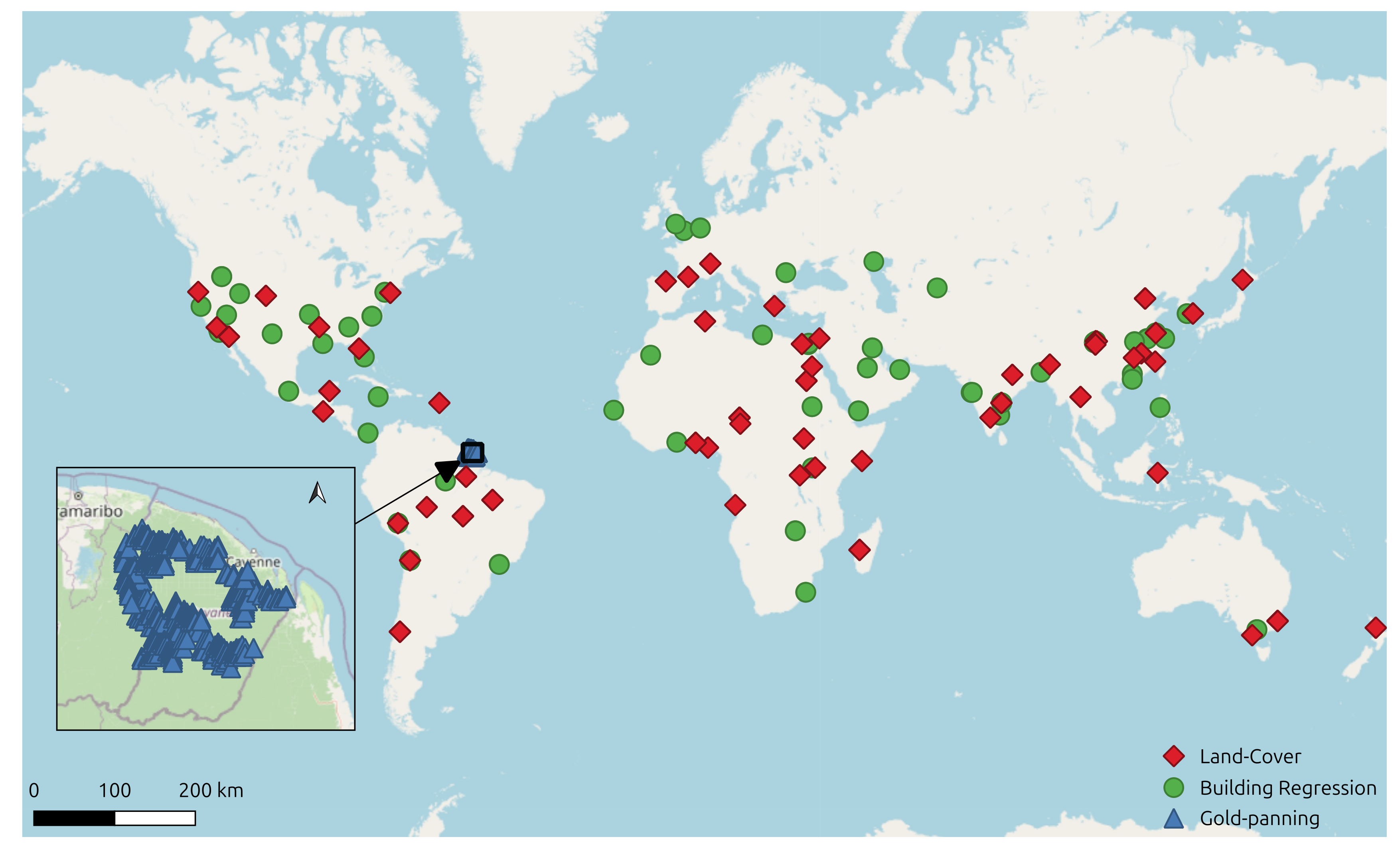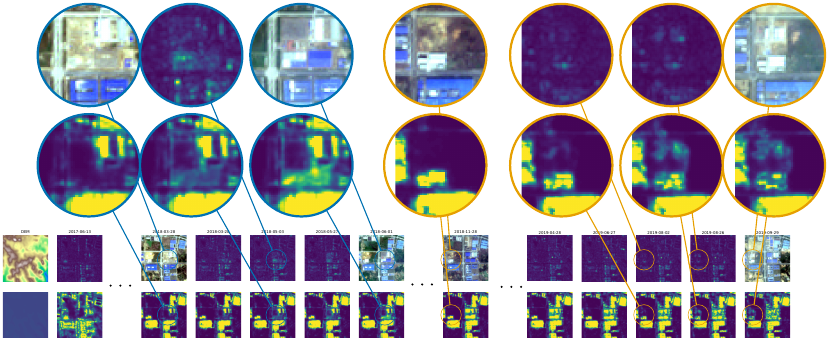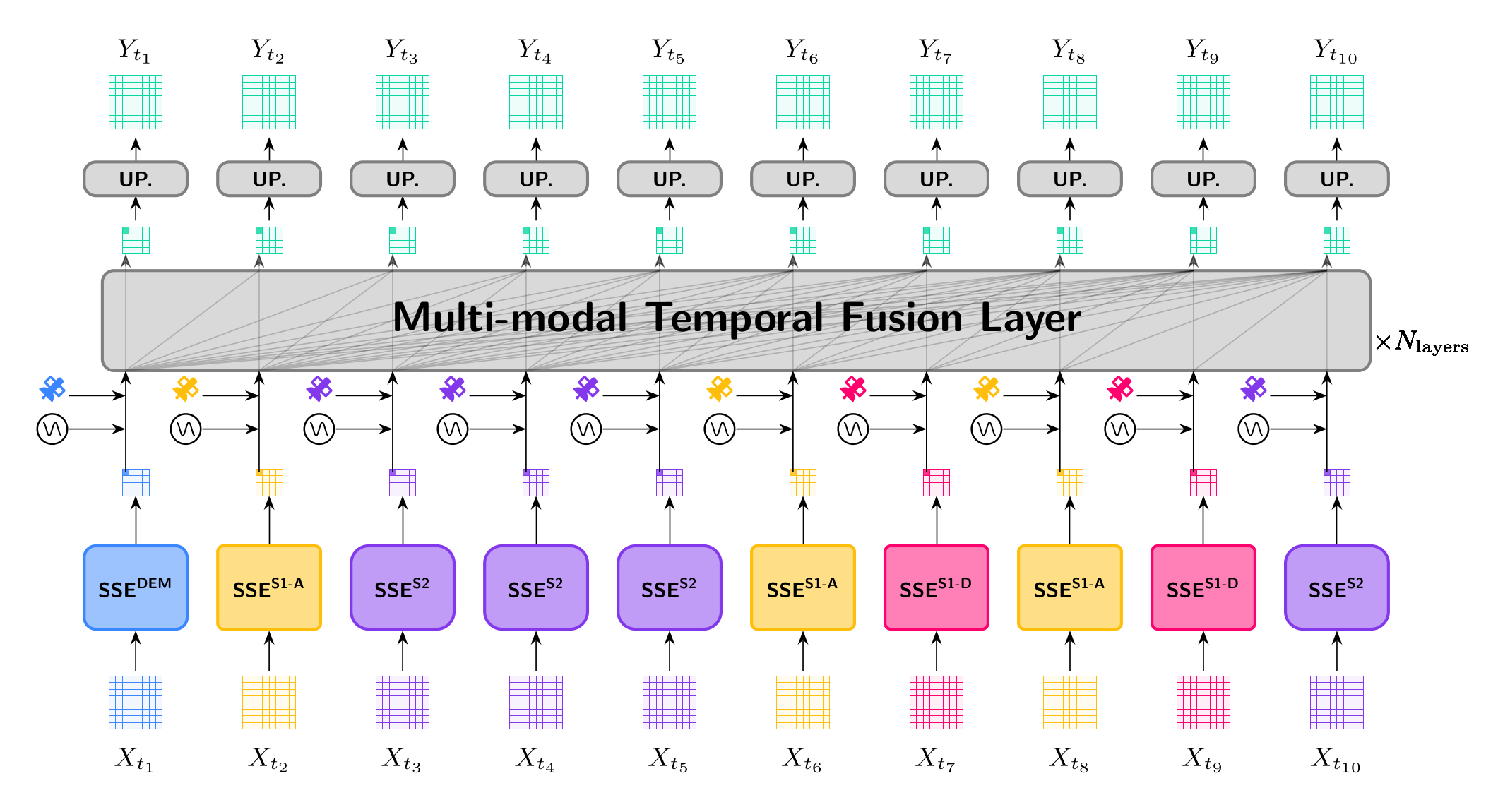
While online Earth monitoring with Satellite Image Time Series (SITS) is essential for tracking rapid anthropogenic changes, existing remote sensing foundation models remain unsuited for streaming SITS. We introduce IRMA, the first foundation model tailored for online land monitoring. IRMA leverages a novel dual-form framework that unifies parallelized multi-modal pre-training (Sentinel-1/2) with an efficient recurrent inference mechanism. Our self-supervised objective produces latent representations that simultaneously maintain temporal stability against seasonal variations and sensitivity to permanent land modifications. To evaluate our method, we present MELBA, a multi-temporal benchmark spanning land-cover, building density, and gold-panning tasks. Experimental results show that IRMA achieves competitive performance with state-of-the-art baselines in the mono-modal setting while using fewer parameters. Furthermore, qualitative analyses suggest that IRMA effectively fuses multi-modal observations, thus providing representations relevant for online monitoring.
@article{dumeur2026irma,
title={},
author={Dumeur, Iris and Aitola, Aitor and Anger, J{\'e}r{\'e}my and Facciolo, Gabriele},
journal={arXiv preprint},
year={2026}
}
This work was financed by the Agence Innovation Défense (AID), within the framework of the Dual Innovation Support Scheme (RAPID - Régime d'APpui à l'Innovation Duale), for the project 'DETEVENT' (Agreement No. 2024 29 0970).
This work was granted access to the HPC resources of IDRIS under the allocations 2025-AD011016513 and 2025-AD011012453R4 made by GENCI.
Sentinel-1 and Sentinel-2 data is from Copernicus. This paper contains modified Copernicus Sentinel data.